

latest posts
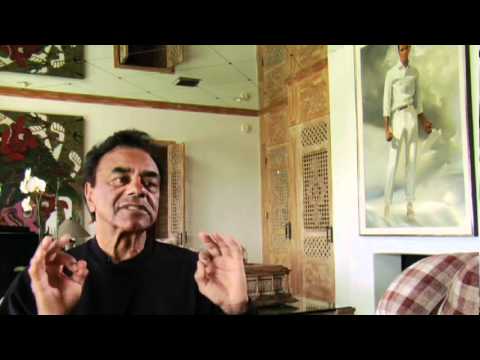
“Kol Nidrei” sung by Johnny Mathis
This most iconic and instantly recognizable sacred Jewish song has had a lot of treatments over the many centuries it’s been around. While the Aramaic lyrics are quite a mouthful even for a native Hebrew speaker, a surprising number of mainstream pop singers have tried to make the prayer their own, including Al Jolson, Neil Diamond, Perry Como – and Johnny Mathis! In this revealing interview, he describes Kol Nidrei as “…so emotionally driven that I got, I would say, 95% of the words correct.” As I do my best to make this prayer my own tonight, together with cantors all over the world, I will try to remember what inspired Johnny to do the same.

Carrie Newcomer: If Not Now
One of my resolutions this year is to think more about the “other”—the other person, the other point of view, the other side of the world. As you might imagine, Judaism has a lot to say about it. The great rabbi Hillel, who lived in the earliest days of the Common Era, wondered “If I am not for myself, who will be for me? But if I am only for myself, who am I? If not now, when?”

Eviatar Banai: Abba (Dad)
At the risk of sounding hackneyed, I think becoming a father has made me a better person in every way. It has also given me new insight into all the father figures I’ve known, and, especially at this time of year—to use appropriate prayer book parlance—into the notion of a Heavenly Father.
Irving Berlin: Don’t Send Me Back to Petrograd
We like to think of Irving Berlin as one of the most quintessentially American songwriters, but like so many of them, he had his roots elsewhere. He wrote this little-known tune for Fanny Brice in 1925, soon after legislation had been passed placing quotas on immigration. In this live recording by the incomparable Judy Blazer and NYFOS’s own Michael Barrett, listen for lyrics like “There’s millions of people on the shore / Why can’t you make room for just one more” and marvel at how relevant Berlin’s piece still is.
Joey Weisenberg: Nachamu Nigun
The High Holy Days have arrived yet again, the busiest time of a cantor’s year. I find that a song without words (Hebrew: nigun) puts my heart and mind at ease more than any other. When composing this one, my friend and teacher Joey Weisenberg was inspired by the famous phrase in Isaiah 40:1, “Comfort ye” (Hebrew: nachamu).
J.S. Bach: Cantata No. 11
To end the week on an upbeat, let’s have a group sing. Here is the opening chorus from Bach’s Cantata No. 11. It is from the marvelous complete cantata recordings by Gustave Leonhardt and Nicholas Harnoncourt. I had the good fortune of participating in masterclasses with both of them on various occasions. I wasn’t exactly a baroque-nik, but their music making was so fresh and vital, I felt I needed to learn from them.

J.S. Bach: Mein Leben hat kein ander Ziel
Continuing our quick survey of J.S. Bach, here is another cantata aria. It is really chamber music. The countertenor’s expressive part is underpinned by an incredible duet between the organ and oboe, creating a kind of trio sonata. The mastery of counterpoint is intimidating (at least for us performers), but the outcome is so joyful, it’s irresistible. The text? Well, it is about death, but the joy comes not from some promised afterlife, where, finally, everything will be tolerable. It is about living one’s life fully, so that when you reach the endgame you are ready, fulfilled, and feel that you have made some contribution that has been ultimately satisfying.
J.S. Bach: Tief gebuckt und voller Reue
Today let’s revisit Bach’s Cantata No.199. It’s a favorite of sopranos, for the obvious reason of the absolute beauty and gentleness of the central aria “Tief gebuckt und voller Reue”. In the best Lutheran tradition, the text addresses God, admitting guilt and weakness, but implores God to be patient. This beautiful performance is sung by Magdalena Kozena and conducted by John Eliot Gardiner.
J.S. Bach: Bist Du Bei Mir
I’m surveying some of my favorite Bach this week. I won’t be able to make a dent in the 250 surviving Cantatas, Oratorios, Masses, or Passions, alas. It’s true that most of Bach’s vocal output is liturgical. There are exceptions: The Coffee Cantata, the Hunt Cantata, and this beauty found in Anna Magdalena Bach’s Notebook. Did she write it herself? One of her talented sons? Or was it a valentine from her husband that she wrote down in her musical journal?
J. S. Bach: Schlummert ein, ihr matten Augen
I’ve just completed a successful time at the 25th annual Moab Music Festival. It’s a big achievement which I am proud of. NYFOS is celebrating our 30th year starting next month, so this seems to be a big anniversary year for me. Moab and NYFOS have converged on many occasions, but never around the music of Bach. There are so many specialty groups now that specialize in early music, which includes Bach. At NYFOS I guess we feel that Bach is covered.
Damien Sneed: I Dream a World
“I Dream a World” is one of the most beautiful and loving poems by Langston Hughes I have come across. It was set to music by composer Damien Sneed in 2017. Langston speaks about a dream world where every person is equally as valuable and should be treated with respect. As farfetched as this idea may seem, I believe that this world Hughes is speaking of can actually come to fruition. He didn’t see it in his lifetime and I probably won’t see it in mine, but he contributed to that becoming a reality one day.
William Bolcom: Ballad of the landlord
“Ballad of the landlord” is a poem by Langston Hughes. It basically is a dialogue between an African American tenant and a white landlord. It’s interesting to me that Langston doesn’t offer any opinions. He tell’s the story as it happens and the reader/ listener has no choice but to develop their own opinion.
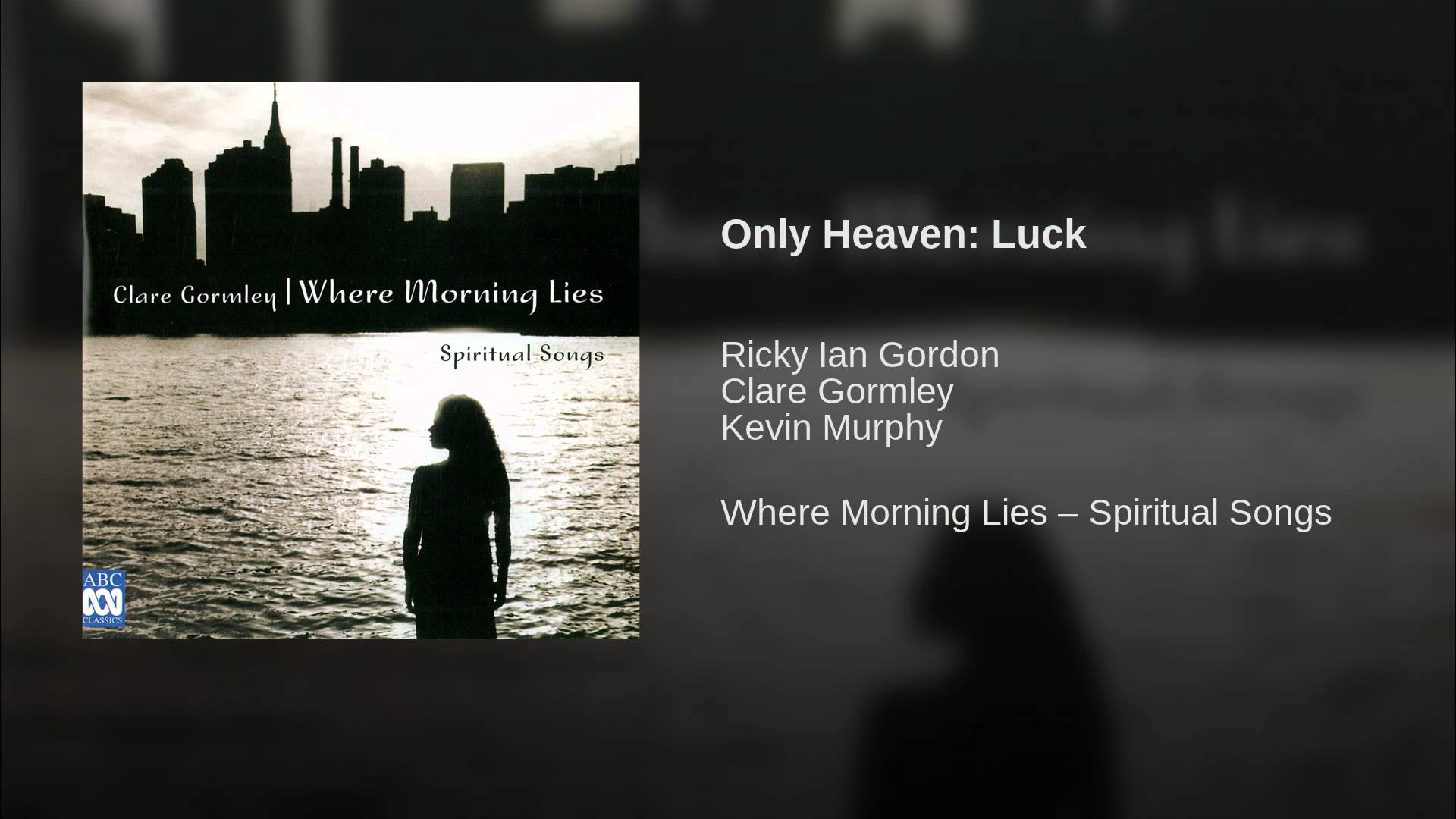
Ricky Ian Gordon: Luck
During my rehearsals with Ricky Ian Gordon for our concert on September 18, I noticed that in his home there was a framed poem on top of the door to his studio. I asked him about it, and he expressed to me that it meant a lot to him, and was one of the most significant settings of a poem that he’s written. The poem is “Luck” by Langston Hughes.
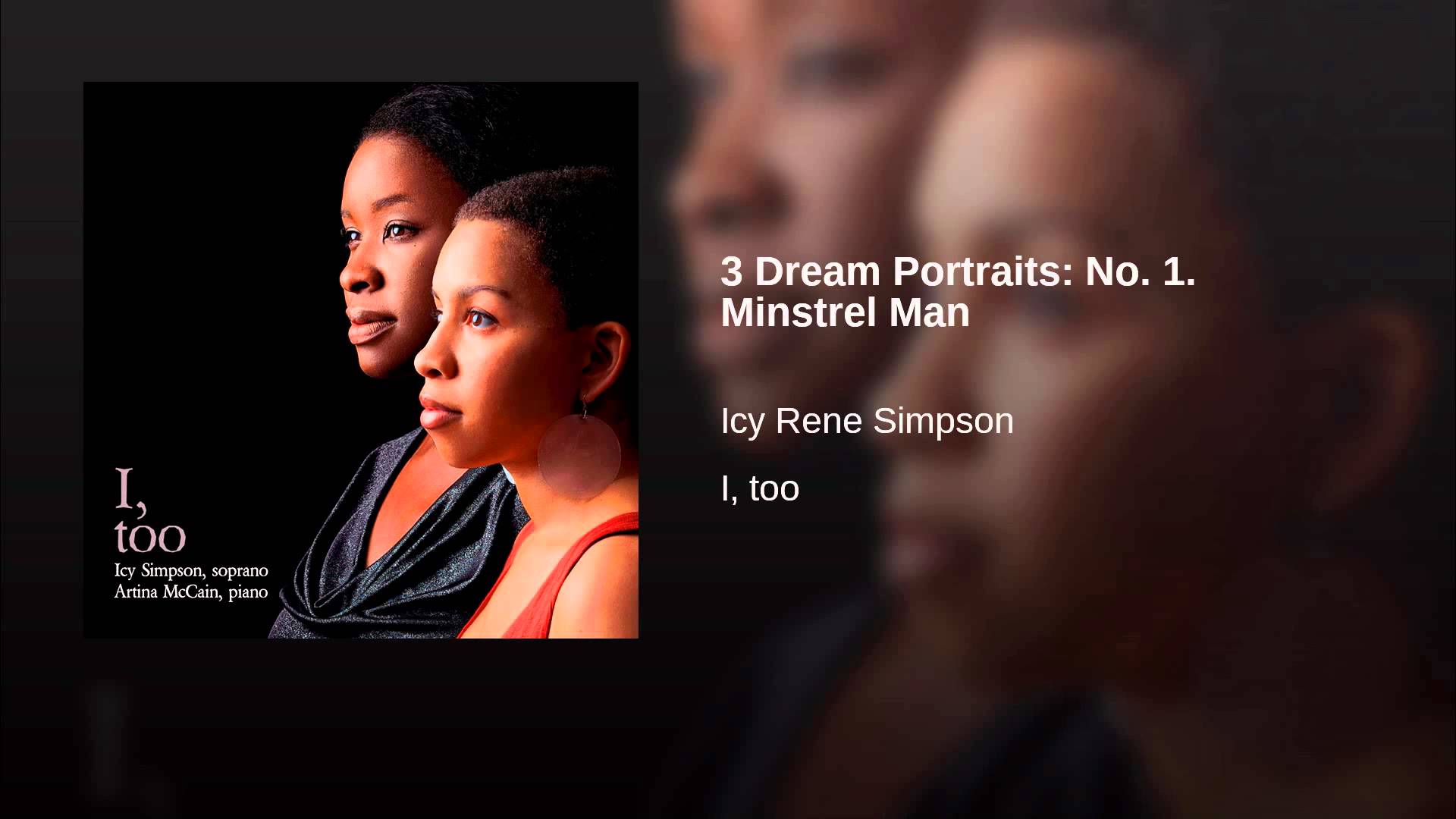
Margaret Bonds: Minstrel Man
Right after I left Opera Theatre of St. Louis last summer, I went to West Palm Beach Florida. I was competing in the national rounds of a year long competition presented by NANM (National Association of Negro Musicians) NANM is the oldest organization for the preservation of African American Music. Each year, there is a different instrument that is the focus of the competition. Knowing that it was the year for “voice” my teacher helped me put together a solid program. The singers were required to present an Aria, Lied, African American Art Song, and a Spiritual. Surprisingly, I had never even heard of an African American Art Song.
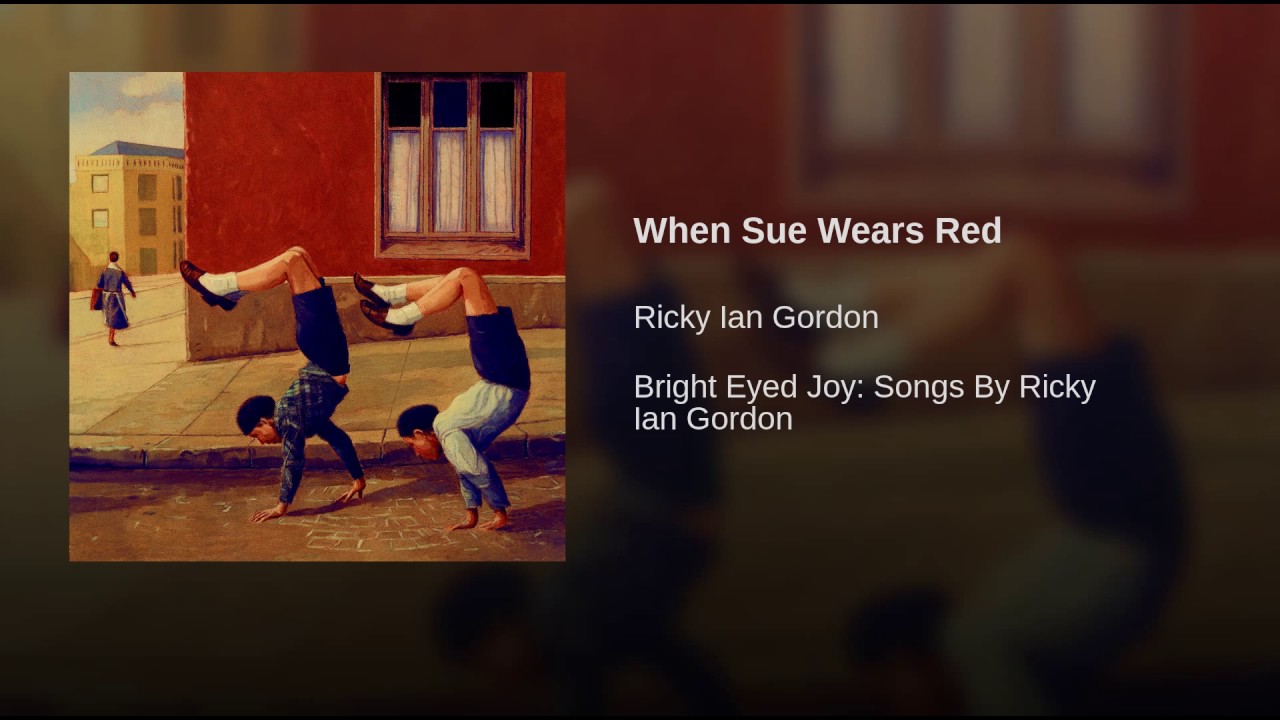
Ricky Ian Gordon: When Sue wears Red
The piece I was given was “When Sue Wears Red” This piece was my introduction to both Ricky Ian Gordon and to Langston Hughes who wrote the text. To the readers that know the work of both of these men, you can understand how mind blown I was when I researched them for this project. I had heard of both artists but had never actually worked on anything of theirs.